February 25, 2026
New WhatsApp SIM-Binding Rules 2026: Is Your Privacy at Risk? A Legal Perspective
The way India uses WhatsApp is about to change forever. Following the latest directives from the Department of Telecommunications (DoT), new security protocols are being enforced with a final compliance deadline of February 28, 2026.
As a legal professional, I have analyzed these changes to help you understand how they impact your digital privacy, business communications, and legal standing.
What is the New SIM-Binding Rule?
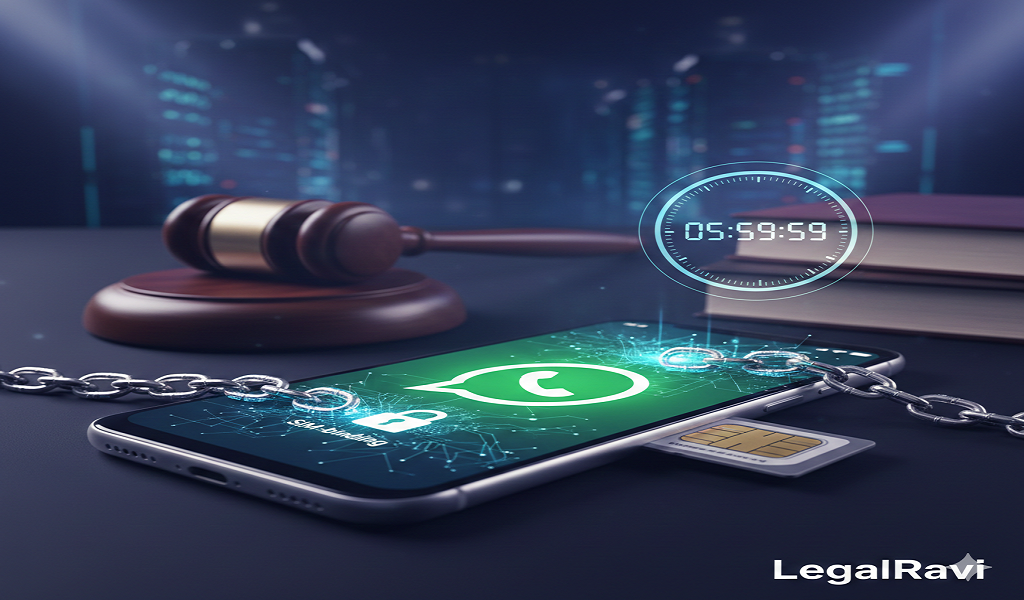
The "SIM-Binding" mandate requires the WhatsApp application to be cryptographically linked to the physical SIM card present in the mobile device. Under the new Telecom Security Protocol 2026, WhatsApp is shifting from "Account-based" security to "Hardware-Cryptographic" security.
The core changes include:
· Physical Presence: WhatsApp will only function if the registered SIM card is physically active in the same device.
· The 6-Hour Desktop Rule: For security, WhatsApp Web/Desktop sessions will now automatically expire and log out every 6 hours.
· Re-Authentication: Users will need to perform a biometric or SMS-based re-verification to extend desktop sessions.
1. The Technical Architecture of SIM-Binding
· IMEI-IMSI Mapping: The app will now create a digital handshake between your phone's IMEI number and the SIM's IMSI (International Mobile Subscriber Identity).
· The "Heartbeat" Check: Every 30 minutes, the app performs a silent background check to ensure the SIM is still "Live" in the device. If the SIM is removed or moved to another phone, the session on the primary device is instantly revoked.
· Impact on Multi-Device 2.0: While you can still use up to 4 linked devices, the "Master Device" (the one with the SIM) must now be active and online more frequently than the previous 14-day grace period.
2. The 6-Hour Session Expiry:
The most controversial part of the February 28 deadline is the mandatory logout for WhatsApp Web and Desktop.
· The Logic: DoT identifies "unattended workstations" as the #1 source of data leaks in Indian corporate offices.
· The Law: Under the Digital Personal Data Protection (DPDP) Act, companies are now liable for data breaches. By forcing a 6-hour logout, the government is shifting the "Burden of Security" onto the user.
· Business Lead Tip: If you are a business owner using WhatsApp for CRM, you must now implement Enterprise-grade API solutions rather than standard WhatsApp Web to avoid constant disruptions.
3. Legal Consequences: Section 66C and Identity Theft
As an advocate, this is where you provide the most value. The new rules change how "Cyber Crimes" are litigated:
· Presumption of Ownership: Under Section 66C of the IT Act (Punishment for identity theft), if a fraudulent message is sent from a SIM-bound account, the "Plea of Alibi" (it wasn't me) becomes nearly impossible to prove in a court of law.
· Liability for Shared Phones: In many Indian households, one phone is shared. Legally, the person whose name is on the Aadhaar-linked SIM will now be held solely responsible for any "Objectionable Content" forwarded from that WhatsApp account.
· The "De-linking" Trap: If you lose your phone, you must now immediately file an E-FIR and block the SIM via the Sanchar Saathi portal. Failing to do so within 24 hours could make you legally liable for any misuse during that window.
Why is the Government Implementing This?
From a legal and security standpoint, the DoT and the Ministry of Electronics and Information Technology (MeitY) aim to curb:
1. Cyber-Frauds: Preventing "OTP Scams" where attackers mirror accounts on remote devices.
2. Identity Theft: Ensuring that the person messaging is the actual owner of the linked mobile number.
3. Traceability: Strengthening the framework under the Information Technology Rules, 2021 to ensure accountability in criminal investigations.
Legal Implications for Users and Businesses
For business owners and professionals who rely on WhatsApp for client communication, these rules bring significant challenges:
1. Business Continuity Risks
If your "Business WhatsApp" is handled by a social media manager on a separate device, the 6-hour logout rule will disrupt workflow. Under the new IT guidelines, sharing account access without physical SIM proximity may lead to temporary account suspension.
2. Privacy vs. Surveillance
While the government cites "security," legal experts are debating whether the mandatory SIM-binding infringes upon the Right to Privacy established in the Puttaswamy judgment. Constant re-authentication and hardware-level binding increase the digital footprint of every user.
3. Evidentiary Value in Court
With stricter binding, the "I didn't send that message" defense in legal disputes (under Section 65B of the Indian Evidence Act) becomes much harder to prove. If the SIM was in your phone, the law will presume you were the sender.
What You Need to Do Before Feb 28?
· Update your App: Ensure you are on the latest version that supports the DoT security patch.
· Check SIM Slot: If using a dual-SIM phone, ensure the data-active SIM matches your WhatsApp number.
· Desktop Users: Prepare for frequent re-logins if you use WhatsApp for customer support.
Need Legal Advice on Digital Compliance?
Digital laws in India are evolving rapidly. If your business is facing issues with account bans, data privacy compliance, or cyber-security litigation, get expert counsel today.
[Contact Advocate Ravi – Click Here for a Legal Consultation]
Conclusion
The transition to a "SIM-bound" digital ecosystem is a double-edged sword. While it drastically reduces the chances of remote hacking, it adds a layer of friction to our daily digital lives. As we move toward the February 28 deadline, staying informed is your best defense.
Tags : WhatsApp SIM-binding India 2026, DoT new rules for WhatsApp, WhatsApp Web 6 hour logout, Digital privacy laws India, LegalRavi, IT Rules 2021 update.